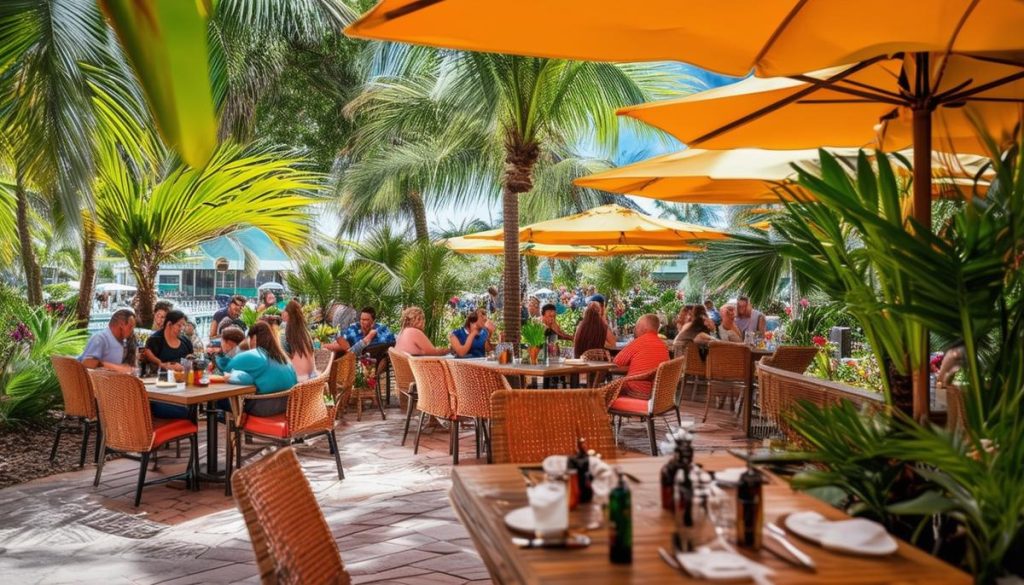
Executive Insights
- Darden Restaurants announced the full wind-down of Bahama Breeze on February 3, 2026.
- 14 locations will permanently close, and 14 will be converted to other Darden brands.
- The decision follows a 7.7% sales decline in 2024 and a shift toward core brand optimization.
- Closures are effective April 5, 2026, with conversions taking 12-18 months.
- The move allows Darden to recycle prime real estate in Florida and other key markets for higher-growth concepts.
The End of an Era for Caribbean-Inspired Casual Dining
In a decisive move that underscores the ruthless efficiency of modern hospitality portfolio management, Darden Restaurants (NYSE: DRI) officially announced the comprehensive wind-down of its Bahama Breeze brand on February 3, 2026. This strategic pivot marks the conclusion of the 30-year-old concept, signaling a broader industry shift where underperforming niche chains are liquidated to fuel the growth of high-velocity core brands like Olive Garden and LongHorn Steakhouse.
The announcement details the permanent closure of 14 locations and the conversion of the remaining 14 sites into other Darden concepts. With the final day of operations set for April 5, 2026, this event serves as a critical case study in corporate real estate realignment and brand consolidation within the full-service restaurant sector.
Strategic Rationale: Why Darden is Liquidating Bahama Breeze
The decision to dissolve Bahama Breeze is not merely a reaction to short-term headwinds but a calculated exercise in portfolio optimization. Despite a loyal following, the brand had become a statistical outlier in Darden’s powerhouse lineup. The primary drivers behind this liquidation strategy include:
- Systemwide Sales Decline: Recent fiscal reports indicated a 7.7% decline in systemwide sales for Bahama Breeze in 2024, a stark contrast to the robust growth seen in Darden’s steakhouse and fine dining segments.
- Market Positioning Fatigue: The “island escape” theme, popular in the late 1990s and early 2000s, has struggled to compete with the rise of experiential fast-casual dining and more modern polished casual concepts.
- Opportunity Cost of Capital: Darden determined that the capital and executive bandwidth required to revitalize a niche 28-unit chain would generate a higher Return on Invested Capital (ROIC) if deployed toward expanding Yard House or LongHorn Steakhouse.
| Strategic Lever | Bahama Breeze Outcome | Core Brand Benefit |
|---|---|---|
| Real Estate | Prime sites liquidated or repurposed | Immediate access to high-traffic locations for expansion |
| Human Capital | Staff reassignment programs | Reduced training costs for growing brands like Olive Garden |
| Supply Chain | Elimination of niche SKUs (exotic ingredients) | Streamlined procurement focused on high-volume staples |
Real Estate Recycling: The Conversion Strategy
A pivotal component of this wind-down is the brand conversion of 14 high-value locations. Rather than selling these assets, Darden is executing a “site conversion” strategy. This approach allows the holding company to retain prime real estate in lucrative markets—predominantly in Florida—while swapping out a low-margin concept for a high-margin one.
Key Conversion Targets:
While specific replacements for each site remain undisclosed, industry analysis suggests that the remaining footprints are ideally suited for:
- Yard House: Requires large square footage for extensive tap systems, matching Bahama Breeze’s large physical footprint.
- Cheddar’s Scratch Kitchen: a value-oriented brand that can utilize the high-traffic suburban trade areas Bahama Breeze occupied.
- LongHorn Steakhouse: Darden’s consistent growth engine, which can easily backfill freestanding pad sites.
The conversion timeline is projected to span 12 to 18 months, allowing for significant interior remodeling to erase the Caribbean aesthetic in favor of the standardized layouts of the incoming brands.
Operational Restructuring and Workforce Reassignment
Darden has emphasized a “people-first” approach to this liquidation, a critical move to maintain morale across its 190,000+ employee base. The wind-down plan includes:
- Transfer Protocols: Offering lateral transfers to employees at the 14 closing locations to nearby Darden properties (Olive Garden, Seasons 52, etc.).
- Severance Packages: For management and tenured staff where transfers are geographically impossible.
- Lease Exits: For the 14 locations closing permanently (e.g., Newark, DE; Livonia, MI), Darden is exiting leases that likely no longer offer favorable terms or demographic alignment.
Industry Implications: The Death of the Niche Chain
The Bahama Breeze wind-down reflects a macro-trend in the hospitality industry: the consolidation of the middle market. Multi-brand operators are increasingly shedding “distraction brands”—concepts with fewer than 50 units that do not have a clear path to national scale.
The Takeaway for Investors:
This move signals that Darden is prioritizing margin expansion and operational simplicity over portfolio diversity. By cutting the “long tail” of their portfolio, they reduce corporate overhead and marketing complexity, potentially boosting earnings per share (EPS) in upcoming fiscal quarters.
In-Depth Q&A
Q: When is Bahama Breeze closing permanently?
All Bahama Breeze locations will cease operations as the Bahama Breeze brand on April 5, 2026. 14 locations will close permanently, while the other 14 will undergo renovation to become other Darden brands.
Q: Which Bahama Breeze locations are being converted?
14 locations, primarily in Florida (including Orlando, Tampa, and Kissimmee) as well as sites in North Carolina, South Carolina, Georgia, and Virginia, are slated for conversion into other Darden concepts like Yard House or LongHorn Steakhouse.
Q: Why is Darden Restaurants closing Bahama Breeze?
Darden determined the brand was no longer a strategic priority following a review that highlighted declining systemwide sales (down 7.7% in 2024) and better ROI opportunities by repurposing the real estate for its stronger core brands.
Q: What will happen to Bahama Breeze employees?
Darden has pledged to transfer as many employees as possible to its other local restaurants (such as Olive Garden or LongHorn Steakhouse) and offer support packages to those who cannot be reassigned.
Q: Is Bahama Breeze going bankrupt?
No. The closure is a strategic portfolio optimization choice by its parent company, Darden Restaurants (NYSE: DRI), which remains financially strong. It is a solvent wind-down, not a bankruptcy liquidation.